Empty Message
Saturday, January 8, 2022

Saturday, January 1, 2022
What Are The 9 Modal Verbs
Have to and have got to break all of the rules that pure modal auxiliary verbs follow. They consist of more than one word, they use infinitive forms of the main verbs, the auxiliary verb do is used for negatives and questions , and they conjugate for the third-person singular. Despite all of these differences, these semi-modal auxiliary verbs have several modal meanings.

Modal auxiliary verbs, also commonly referred to as modal verbs or modals, are used to shift the meaning of the main verb in a clause. These shifts include expressing possibility, ability, permission, obligation, or future intention. Students can find these confusing because one modal auxiliary verb can have multiple meanings depending on the context. All modal auxiliary verbs are followed by a main verb in its base form ; they can never be followed by other modal verbs, lone auxiliary verbs, or nouns. Modal verbs are are the bread and butter of every grammar class. Students encounter them at all levels, from foundation to proficiency.

In C-level classes, students should be able to recall all types of modal verbs and identify what job they do. Modal verbs can signify ability, probability, advice, request, permission, prohibition, obligation, certainty, and possibility. Of course, teaching students about all nine of these categories in one session would be like drinking water from a firehose. So I've provided three learning activities aimed to engage C-level students and develop their fluency of modals of possibility. It's important that students are equipped with useful phrases, expressions that they can actually use.

Modal verbs are so common that most English speakers don't even know what the grammatical name for them is. Note that modal auxiliary verbs are a type of auxiliary verb. Auxiliary verbs encompass tenses, aspects, modality , voice, emphasis and so on. There are many other category of verbs in English like phrasal verbs.
In this ESL skills course you can learn natural English phrases. Learn even more about English grammar in this introduction to grammar course. Modal auxiliary verbs are used to uniquely shift the meaning of the main verb they modify, expressing things such as possibility, likelihood, ability, permission, obligation, or intention. As we will see, how and when we use modal verbs greatly affects the meaning of our writing and speech. Whethermodals,modal verbs,modal auxiliariesormodal auxiliary verbs, they are all the same.

The modal verbs and the primary verbs are called auxiliary verbs. The difference between these two groups of verbs is that we can use modal verbs as auxiliary verbs only. In other words, we cannot use modal verbs on their own in a sentence, as they are not complete by themselves. We have to use them with other verbs, which must be in the simple present tense.

The semi-modal auxiliary verb ought to ends in to, which makes the main verb an infinitive. This differs from pure-modal auxiliary verbs, which use the bare infinitive, the infinitive without to, for the main verb. The meaning of ought to is nearly the same as should in all cases. When forming questions or negatives, should is more commonly used than ought to. Being a type of auxiliary verb, the modal verb is mainly used when speakers tend to express moods or attitudes (Ivanovska, 2014; Palmer, 1990; Sinclair, 1990). To be specific, Imre pointed out that modal verb express a variety of meanings, such as "possibility, necessity, politeness, etc" (p. 126).
Furthermore, Ivanovska added that modal verbs convey the meanings as "probability, permission, volition and obligation" (p. 1093). For instance, the modal verb can in It can be good indicated the speaker's attitude of agreement. In addition, it is noted that modal verbs could produce a particular effect, such as giving an instruction or making a request . For example, can in You can park the car here functions as an instruction.

As a modal auxiliary verb, will is particularly versatile, having several different functions and meanings. Modal auxiliary verbs are used to show a necessity, capability, willingness, or possibility. Unlike most verbs, there is only one form of these verbs. Typically, verb forms change to indicate whether the sentence's structure is singular or plural. Most verbs also indicate whether something happened in the past, present, or future.

This is not the case with most modal auxiliary verbs, which makes them simpler to understand and use correctly. Last but not the least, when the teaching context changes where the learners are intermediate or higher learners, the use of grammar used in different context will be explained to the students. As Ivanovska mentioned that the students' task is to manipulate the modal verbs in particular context since "the meaning depends upon the context in which the auxiliary is used" (p. 1099). Batstone defined this approach as a process of teaching which refers to the approach that engages learners in language use. In other words, teaching grammar should not only introduce the forms but also teach how to use accurately, meaningfully, and appropriately in different context. This approach aims at concentrating learners' attention on meanings in context.

As Thornbury sated, "if learners are going to be able to make sense of grammar, they will need to be exposed to it in its contexts of use" (p. 72). In English, modal verbsare a small class of auxiliary verbs used to express ability, permission, obligation, prohibition, probability, possibility, advice. A small group of auxiliary verbs, called the modal verbs are only used in combination with ordinary verbs. A modal verb changes the other verb's meaning to something different from simple fact.

Modals may express permission, ability, prediction, possibility, or necessity. Modals are auxiliary verbs i.e., helping verbs which express the modality of a statement or a main verb. Modality could be anything starting from the request, likelihood, permission, ability, capacity, suggestions, orders, obligations to advice. So, basically, the Modal verbs are used along with the main verb in order to give additional information regarding its nature. For instance, consider the statement given below.
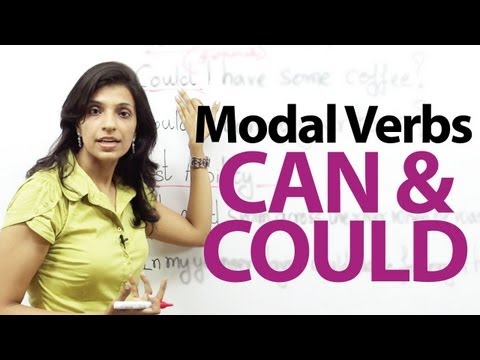
In English there are two types of auxiliary verb, primary auxiliaries and modal auxiliaries. The three primary auxiliary verbs are 'be', 'have' and 'do'. There are ten common modal auxiliary verbs and they are 'can', 'could', 'will', 'would', 'shall', 'should', 'may', 'might', 'must' and 'ought'. Language tutors understand that modal verbs often pose challenges for learners of English due to their many functions, meanings and grammatical rules. Once you've completed this short reader, you may wish to then unlock our beginner, intermediate and advanced worksheets to check your ability and understanding.

Similarly, we cannot use modal verbs with main verbs that are in a past-tense form; the verb that follows a modal must always be in its base form . Instead, we either use certain modal verbs that have past-tense meanings of their own, or auxiliary have to create a construction that has a specific past-tense meaning. The modal auxiliary verb would has a variety of functions and uses. It is used in place of will for things that happened or began in the past, and, like shall, it is sometimes used in place of will to create more formal or polite sentences.

It is also used to express requests and preferences, to describe hypothetical situations, and to politely offer or ask for advice or an opinion. As with the primary auxiliary verbs, modal verbs can be used with not to create negative sentences, and they can all invert with the subject to create interrogative sentences. In Chinese grammar, the negative word is put before the modal verbs. Reliance on prior L1 knowledge, learners might put "not" in front of "could" and the sentence above could be incorrectly structured as He not could be over fifty. This indicates that L1 could interfere with L2 learning. As Ellis , and Larsen-Freeman and Long noted that the learner's L1 affects the other language levels.

In the examples above, the form of the verb fall changes according to the rule of subject-verb agreement. When the subject of the sentence is "I", "You", "We" or "They", the verb is fall. It can be seen from the second sentence that the form of the verb fall changes into falls when the subject is "He", "She" or "It". In EFL class, whereas, learners might tend to plus "-s" behind modal verbs when they find the subject in the sentence is the third person singular , such as he cans. This problem is partly due to the learners' previous knowledge of grammar which follows the rule of the verb must agree in number with the subject. You may also find modal verbs referred to as "auxiliary verbs".

This is because they help the main verb by adding extra information about it to the sentence. The information it adds lets the listener know things like our intentions, the likelihood of an event, or if they are capable of or allowed to do something. As if English wasn't hard enough to learn, modal verbs complicate things even further. There are a lot of irregularities in the English language that can be confusing to students learning it as a second to their native tongue. English and other Germanic languages, however, utilize modal verbs to help express a function and are vital to gaining command of the English language.

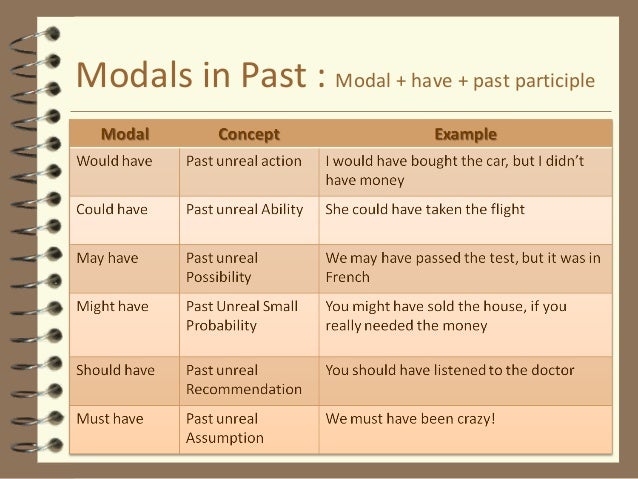
Had better is a two-word semi-modal auxiliary verb that has the same characteristics as pure modal auxiliary verbs. Since modal auxiliary verbs do not have a past tense form, we can use the modal auxiliary along with the word 'have' and a past participle. Past participles typically end in -d, -ed, -n, or -en, creating the past tense 'wished, looked, taken,' and so forth. Let's take a look at an example in the present tense. This article mainly investigates on aspect of English grammar, modal verbs, which can be problematic for EFL learners in the Chinese teaching context.
The difficulties in language learning and teaching, and rationales why modal verbs are tough to learn are examined. Then the two teaching approaches are examined, teaching the grammar works and contexts of use, which should be focused differently according to learners' level of proficiency. The research on varying the relative complexity of teaching forms or language use needs to be further discussed in the future research. Thornbury put forward that "rules of use heavily depend on contextual factors" (p. 12).
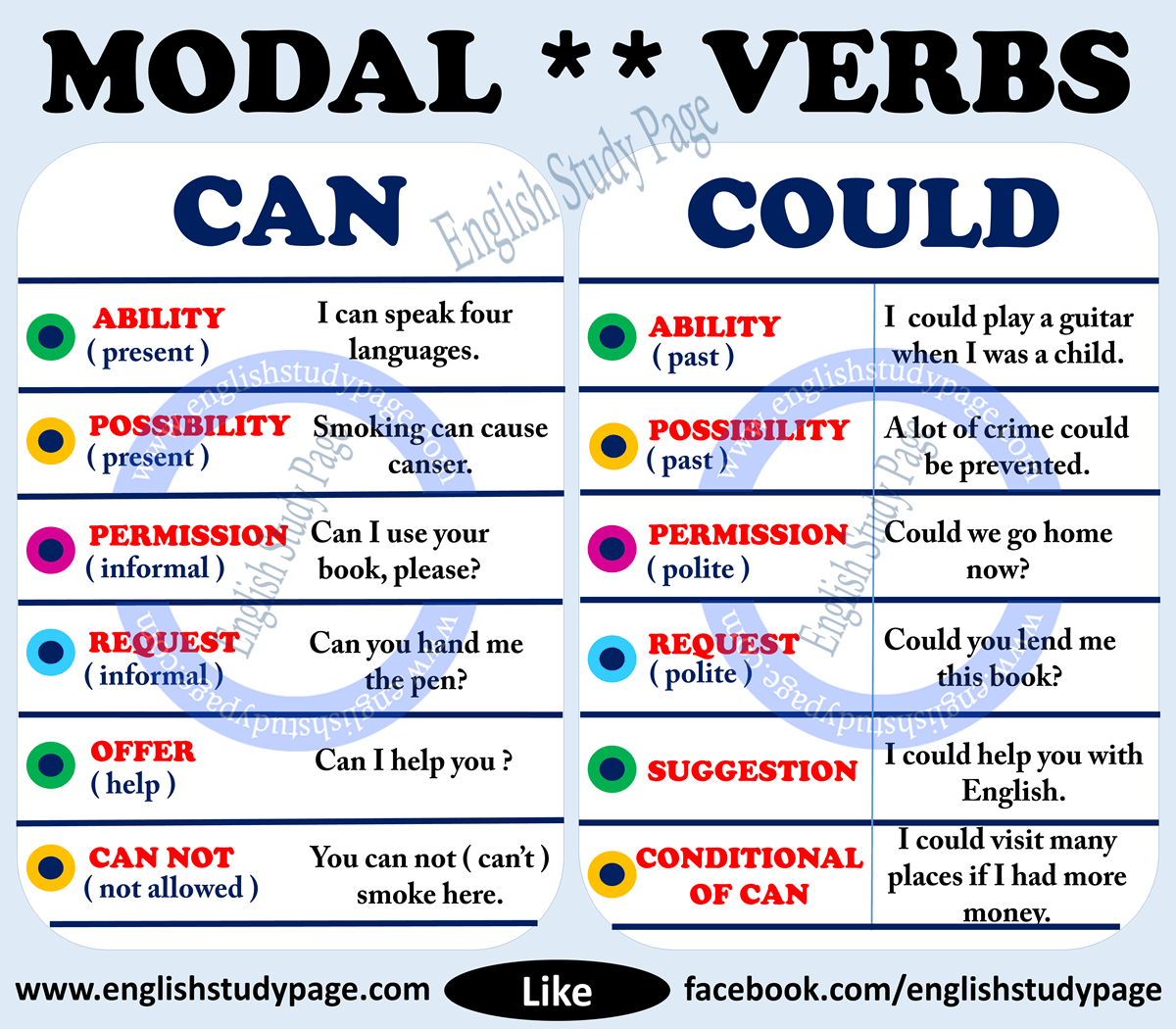
For example, Sue can come could be understood differently in different contexts. In this example, the underlying meaning of can is possibility. However, when interpreting can from the speaker's view, it indicates that the speaker allows Sue to come, which is a kind of permission. Meanwhile, from the listener's view, it can be comprehended as Sue is free on the day or Sue's leg is better, and she is able to walk again.
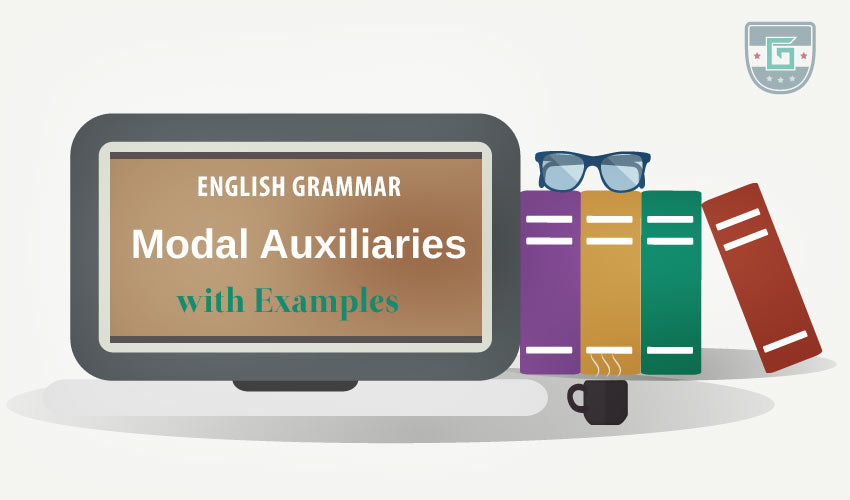
As Lewis concludes, "the modal verbs always express the speaker's (or listener's) judgment or opinion at the moment of speaking". In this respect, in order to better understand the meaning of modal verbs, learners should take the specific context into consideration. The English modal verbs are a subset of the English auxiliary verbs used mostly to express modality (properties such as possibility, obligation, etc.).

They can be distinguished from other verbs by their defectiveness and by their neutralization (that they do not take the ending -s in the third-person singular). Modal verbs present all kinds of moods in sentences. A modal verb comes before a verb and modifies its meaning and expresses modality i.e. asserting or denying possibility, likelihood, ability, permission, obligation, or future intention. Adjectives and Adverbs – Adjectives and Adverbs Tests category includes free online quizzes on adjectives and adverbs tests consisting of multiple choice questions with answers.

In these three statements, "dare", "can" and "may" are the modals. If you look closer at them you will understand what we mean by the statement that modals express modality. In the first statement, the Modal "dare" shows that it's an order. In the second statement, "can" signifies the ability of the subject "I" and in the third one, the word "may" highlights some possibility. So, the Modals used in these sentences give us some additional information about the main verb, noun or subject of the statement. Many sources and student textbooks do not differentiate between pure modal auxiliary verbs and semi-modal auxiliary verbs, and others separate them completely.

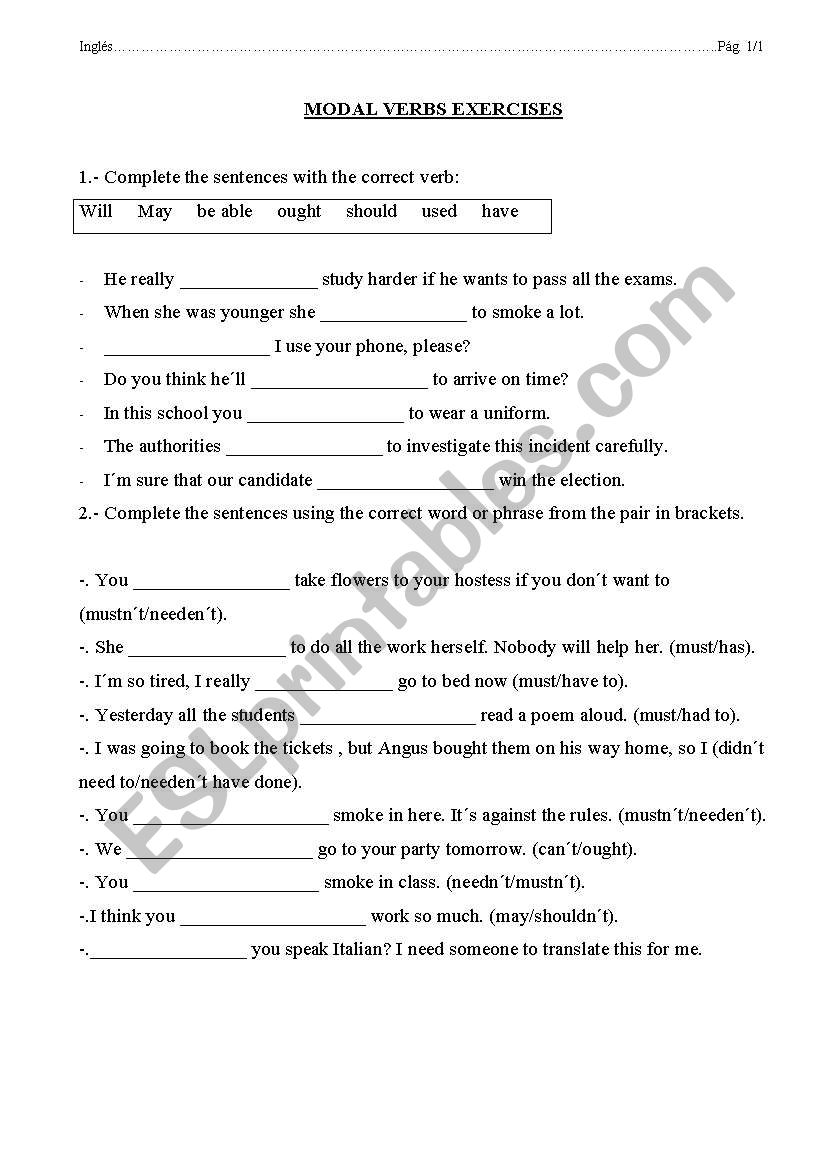
Write down all the sentences with modal auxiliary verbs. Indicate what type of modal auxiliary verb is used in each sentence. Prepared list of sentences using a wide range of modal auxiliary verbs . Modal auxiliary verbs like can, may, ought, shall, and wood are used to suggest an impending or possible upcoming action.

Learn to identify modal auxiliary verbs, understand their purpose, and indicate past tense with the provided examples. Auxiliary use - You can only use modal verbs as auxiliary verbs, in order to modify the meaning of the main verb. A greater variety of double modals appears in some regional dialects. In English, for example, phrases such as would dare to, may be able to or should have to are sometimes used in conversation and are grammatically correct.

The double modal may sometimes be in the future tense, as in "I will ought to go," where will is the main verb and ought to is also an auxiliary but an infinitive. Another example is We must be able to work with must being the main auxiliary and be able to as the infinitive. Other examples include You may not dare to run or I would need to have help.

Ought is used with meanings similar to those of should expressing expectation or requirement. The principal grammatical difference is that ought is used with the to-infinitive rather than the bare infinitive, hence we should go is equivalent to we ought to go. Because of this difference of syntax, ought is sometimes excluded from the class of modal verbs, or is classed as a semi-modal. The negated forms are will not (often contracted to won't) and would not (often contracted to wouldn't).

For contracted forms of will and would themselves, see § Contractions and reduced pronunciation above. There are certain rules which surround the use of modal verbs, for example the word 'to' must never be used after a modal verb. Learning these rules and how a modal verb can function within a sentence can greatly help you in forming grammatically correct sentences.

All of these modal verbs must come before a verb to help express at least one of the modality examples listed above. In some cases, though they can be used to express more than one modality, but you'll see more on that in the following section. So, let's take a look at some example sentences and highlight how the modal verb is expressing modality and adding more information to the verbs that follow them. Since modal verbs are not the main verb in a sentence, they are not conjugated or inflected to show grammatical changes in the subject. These modal verbs are used to express different meanings of possibility and intention.

They enhance the meanings of main verbs, and certain verbs are used to express each meaning. Modal verbs attach differing shades of meaning to the main verbs they modify. It is often the case that this difference in meaning is or seems to be very slight. Sometimes it is possible to reply to a question by means of a short answer, consisting of a subject, followed by the verb or first auxiliary used in the question. The rules for forming affirmative and negative short answers are similar to those for forming affirmative and negative tag questions.

Friday, October 22, 2021
Payable On Death Account Chase Bank
There is an easy solution to avoid probate with your checking and savings accounts. Louisiana allows certain financial institutions (e.g. banks, savings and loan associations, credit unions) to provide accounts with payable on death or survivorship designations. These statutes relieve the financial institution from liability for distributing the assets to the survivor named on the account . Although the financial institution may distribute funds to the POD beneficiary, a POD designation does not determine ownership. In Louisiana, the law does not prevent an individual from enforcing a property right against the person to whom the account was paid. For example, Boudreaux contributes $50,000 of community property assets to a certificate of deposit POD to Pierre, his child from a prior marriage.

Upon Boudreaux's death, the financial institution will distribute the entire $50,000 to Pierre. Because the money used to open the account was community property, Boudreaux's wife, Clotile, may enforce her community property rights of half of the account value. Clotile would have to seek a remedy from Pierre rather than the financial institution. A forced heir may also seek a remedy for their portion of funds paid to a POD beneficiary. It is easy to convert an account to a payable on death account. The account holder needs only to notify the bank of who the beneficiary should be.

The bank, on its end, will give the owner of the account a beneficiary designation form called a Totten trust to fill out. The completed form gives the bank authorization to convert the account to a POD. Any bank account with a named beneficiary is a payable on death account. When an account owner dies, the beneficiary collects the money.

The beneficiary needs to show the financial institution a photo ID and the deceased's death certificate. Payable on death accounts can help streamline the process of transferring certain assets to loved ones after you pass away. Also referred to as a POD account or Totten trust, a payable on death account can be established at a bank or credit union and is transferrable to the beneficiary of your choosing. There are different reasons for including a payable on death account in your estate plan and it's helpful to understand how they work when deciding whether to create one. Estate planning is best done with the counsel of a financial advisor, who can help you coordinate your investment goals with your end-of-life wishes. A joint bank account is a ubiquitous and popular way to own an account with one's spouse, children, loved ones and friends.

While traditionally, beneficiaries are associated with life insurance policies, IRAs, annuities, etc., you actually can add a beneficiary to your bank account. Doing so makes the process of transferring money after you pass away easy and obvious for the person you want the money to go to. While banks do not require accounts to have named beneficiaries, it's very common for them to have what's known as a Payable on Death account. And the good news is, even if you have an existing bank account, it's easy to convert it into a POD account at any time. The big benefit of naming a bank account beneficiary is that it allows the funds in the account to bypass the probate process after you die. Unless a beneficiary is named, any money in your checking or savings account will become part of your estate after you're deceased.

Then it has to go through probate before any of your heirs can access it. The owners of many bank accounts, especially savings accounts and certificates of deposit name payable-on-death beneficiaries for the accounts. That means that when the account owner dies, the POD beneficiary can simply claim the money from the bank. The deceased person's will doesn't come into play, and there's no need for any probate court involvement, either.
An individual with an account or certificate of deposit at a bank can designate a beneficiary who will inherit any money in the account after his or her death. A bank account with a named beneficiary is called a payable on death account. People who opt for POD accounts do so to keep their money out of probate court in the event that they pass away. You might want to change your POD beneficiary if your circumstances change.
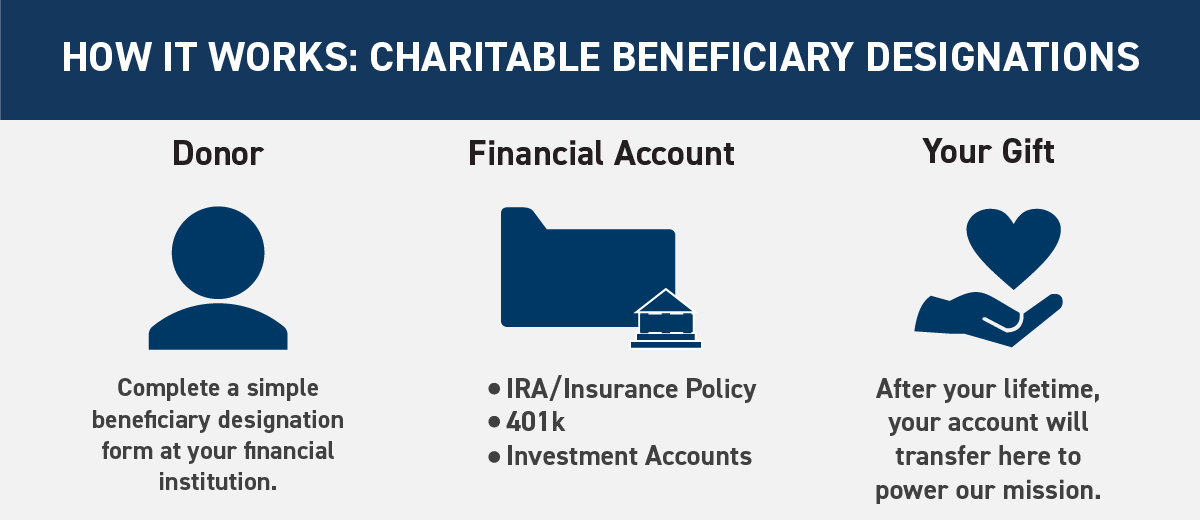
If you divorce but your former spouse is still listed as the POD beneficiary, the money will still go to her unless you change the beneficiary. If you named your irrevocable trust as POD beneficiary, you cannot change the beneficiary designation. If your named beneficiary dies before you and no one else is listed as the POD beneficiary, the bank account becomes part of your probate estate. You can avoid these problems by reviewing your account beneficiaries a least every two years. Most banks and credit unions allow you to name payable-on-death beneficiaries on your accounts.

I reviewed many times how this can be used to increase your deposit insurance coverage. If you don't need to worry about increasing your deposit insurance coverage, you may still want to specify beneficiaries on your accounts. When the owner dies, the account doesn't have to go through the probate process.
The beneficiary can claim the account directly at the bank or credit union. Once an account is established, any account holder can also close the account entirely. Given these rules, putting your money into a joint bank account obviously requires a great deal of trust in your fellow account holders. While no account holder can remove another account holder from a joint account without that person's consent, few banks will stop you from withdrawing or transferring the entire balance on your own.

California courts regularly recognize the validity of payable-on-death accounts and allow them to avoid going through probate. This kind of account leaves you total control of the assets during your lifetime. You can change your beneficiary at any time and are free to leave as much or as little money as you like in the account.

All you need to do is properly notify your bank of whom you want to inherit the money in the account or certificate of deposit. The bank and the beneficiary you name will do the rest, bypassing probate court entirely. That's what happened in the recent Florida case of theEstate of Barbara Kesterwho died in 2011, with a will dividing up her property evenly among her five children.

Separately, one daughter, Glenna, took possession of a CD and a credit union account as payable on death beneficiary or joint account holder with right of survivorship. The two sisters who were left out cried foul, but an appellate court ruled in favor of Glenna, concluding that she acted properly in divvying out the three assets per the beneficiary designations. Any money left in the account is granted to the beneficiary they named on the account. Any credit card debt or personal loan debt is paid from the deceased's bank accounts before the account administrator takes control of any assets. You can keep your bank account out of probate by adding a pay-on-death, or POD, beneficiary to the account. The POD is also known as a transfer-on-death, or TOD, account, also called a Totten trust.
Your bank or credit union will add the beneficiary to your account free of charge. After your death, your beneficiary will have to present photo ID and a certified death certificate before the bank will release the funds. A payable on death account, or POD account for short, is a special type of bank account that is recognized under U.S. state law.

POD accounts can be set up for checking accounts, savings accounts, money markets, and certificates of deposit as well as U.S. savings bonds. | Dec 30, 2019 | Comment #415The executor has no authority to do anything when there is a POD on an account. The bank's own internal processes and policies will determine whether they can convert an account or not.

Not all bank core systems can manage a conversion to new owner. Are you sure you weren't a joint owner with the PNC CDs? By law, if you did not request the change, they would have to pay out with no penalty. As far as the SSN/DOB of beneficiaries, that is tied up in the FDIC rules for beneficiaries and insurance.

More banks/financial institutions will be requiring this information. While you may not appreciate providing the information, this information is already on the dark web, so chances of it being pulled from bank systems is really not that high. It will however, make collecting FDIC insurance and getting the funds to the POD/ITF much easier. Just remember, putting John Smith as a beneficiary with no additional information to identify him may not be prudent. There may be a Sr., Jr., or III and the funds were left to Jr., not the III. If Jr. is deceased, the funds go to the estate, not Jr's relatives.

It is always best to have a POD/ITF to make sure the funds go to the rightful heirs and most importantly - POD/ITF pass outside the will and DO NOT GO THROUGH PROBATE AND THE EXECUTOR CANNOT TAKE THE FUNDS. It is recognized by most states and will explain why a bank may require this. In some instances the guardian/custodian of the estate can become bonded and have access to the money to purchase items for the minor child. If they are not bonded then more than likely a court order would be necessary to withdraw any funds. Also the court usually requires a yearly account filing to make sure any funds withdrawn are being used for the child. Most people know they can have a bank account with more than one signer.

In this situation, both people have access to the funds in the account. Adding a beneficiary to a joint bank account is a good way to avoid probate for the money in that account. With the personal information of the beneficiary, the account owner can add a "pay on death" designation to her account in a few minutes by visiting her bank's local branch office. Bring the death certificate and proof of probate to the bank. If the individual left a will, the money in the bank account becomes part of the estate.

It can be accessed only by the executor of the will as part of the probate process, after the court approves the will and the distribution of assets. When a close friend or family member dies, there are a lot of loose ends that you may be responsible for resolving. One of those may be closing their bank accounts (such as checking, savings, CDs, etc.), especially if those funds are needed to pay funeral expenses or to settle the deceased's outstanding debts. Closing a bank account under these circumstances is not always a straightforward process, but with the right documentation it can be. | Oct 15, 2017 | Comment #322I was just reading some info concerning the "cons" of having any accounts as joint unless you really trust the other person. With joint accounts either person has full access to whatever funds are involved in the account and doesn't need the other person's permission to do what they want to do with the account.

I think this is why the bank said you should have gotten there "first" when your mother died. If anything belongs to you, you won't know until the probate is completed. One thing I did find out was that even if a person has a Will, the bank account beneficiary supercedes whatever is in the Will. While you are alive, the beneficiaries have no access to the bank accounts.
In my experience, I just had to bring the certified copy of the death certificate and my ID. I also brought the copies of the account documentation with the account number and the beneficiary designation. This made it easier for the banks to look up the accounts in their system, but I don't think this was necessary for all cases except for that one Wells Fargo CD in which they had used the wrong beneficiary form.

Each owner has the full right to withdraw, deposit, and otherwise manage the account's funds. While some banks may label one person as the primary account holder, that doesn't change the fact everyone owns everything—together. Once money is deposited, all of it belongs fully and equally to each account holder regardless of the source. "Chase Private Client" is the brand name for a banking and investment product and service offering, requiring a Chase Private Client Checking account.

Bank deposit accounts, such as checking and savings, may be subject to approval. Deposit products and related services are offered by JPMorgan Chase Bank, N.A. Member FDIC. Naming a POD beneficiary to your bank account is a simple, effective and flexible way to keep your assets out of probate after death. And naming a POD beneficiary is not the only way to do this. Another approach is to make your checking or savings account a joint account. Most people use their checking accounts to deposit their paychecks and other benefits, along with doing their everyday financial transactions, such as paying bills, rent, mortgage, and other obligations.

It is not as common to name a beneficiary for a checking account, but it may help to have one to smooth the complicated process of having your assets passed down after your death. Here is how you can add a beneficiary to a checking account. When you name a POD beneficiary, you do not give up control or ownership of your bank account. The POD beneficiary cannot withdraw or deposit money into your account. The beneficiary is not entitled to receive correspondence or financial statements from the bank. Upon your death, the account ownership will automatically pass from you directly to your named beneficiary.

Your beneficiary will have immediate access to the funds in the account. A POD account allows for the money remaining in the account when the account owner dies to pass to directly to the beneficiaries named by the account owner. How could the POD be cancell just because you used your POA on the account?. That would mean that anyone who is POD on someone else's accounts cannot be the POA for them also. In your case things got squirrelly when your father passed so soon after you used the POA to take care of the withdrawal for "him" but that certainly should not mean it cancels out your rights under the POD.
The savings account should have to abide by the rules of the POD and give the rest of the funds to that beneficiary who I figure is "you". You may have to get a 3rd attorney's opinion on this one but if it is a decent amount of money, you would be going against your father's wishes if it ends up in Probate when he really meant for you to have. Your sister should get whatever is left after the POD is given to beneficiary. From what I understand, a Will does not supercede what is listed in banks etc. as beneficiaries. That is why we all need to make sure we have beneficiaries listed for all our assets to avoid Probate. Before the deceased's estate is settled and their bank accounts closed, the financial institution needs documents showing proof of death and the person responsible for handling the state.

In most cases that includes a death certificate, copy of the will and a letter from the probate court naming the estate's executor or administrator. However, naming beneficiaries for your bank accounts is an important step that can be taken to protect your assets. If a person wants to name a beneficiary for their checking account in the event of death, the account holder should pass along the name of the person to their bank. A will is another way to see that your assets are distributed according to your wishes after death.

However, assets in a will must go through probate, which takes time and can cause the estate to shrink due to the need to pay fees and perhaps settle debts of the estate. And beneficiary designations take precedence over stipulations in a will. Under normal circumstances, when you die the money in your bank accounts becomes part of your estate. However, POD accounts bypass the estate and probate process. To claim the money, the beneficiary simply has to show up at the bank, prove their identity, and produce a certified copy of the account holder's death certificate. You may wish to convert your checking account to a POD account if you want someone specific to receive the money in it.

To accomplish the conversion of a checking account to a POD account, you choose a beneficiary and notify the bank of your wishes. The bank, in turn, gives you, as the owner of the account, a beneficiary designation form called a "Totten trust" to fill out. The completed form gives the bank authorization to convert the account to a POD, allowing the account's funds to pass directly to the beneficiary after your death. A significant benefit of POD accounts is that an account owner can increase his coverage limit under the Federal Deposit Insurance Corporation . The standard coverage limit for an individual's assets at a particular financial institution, including checking and savings accounts, money market accounts, and certificates of deposit is $250,000.

Subscribe to:
Posts (Atom)
Is It Better To Get Hbo On Hulu Or Amazon
Popular streaming services and cable TV providers.1 It's all on the expertly curated Apple TV app, and it's everywhere — on your fav...

-
Popular streaming services and cable TV providers.1 It's all on the expertly curated Apple TV app, and it's everywhere — on your fav...
-
Empty Message
-
7‑Eleven, Inc. is the premier name in the convenience-retailing industry. They don't like to brag, but they invented convenience stores....

